Bell Flowers and Butterflies Embroidery
A Garden Whisper—Not a Shout
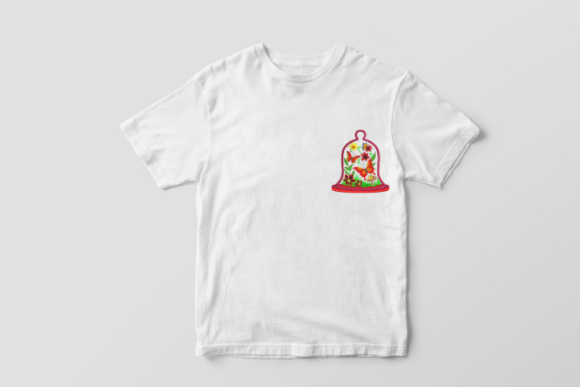
First impression? This isn’t a bold, graphic statement—it’s a quiet, lyrical pause. The Bell Flowers and Butterflies Embroidery design leans into softness: flowing stems, gently arched bell-shaped blooms, and butterflies with wings that suggest motion without sharp edges. It reads as romantic but not fussy, delicate but not fragile. As a designer who’s stitched hundreds of floral motifs for client projects—from boutique baby blankets to custom aprons—I immediately sensed its strength lies in subtlety. It doesn’t dominate a garment or accessory; it invites closer looking. That makes it ideal for handmade products where intimacy matters: a linen tea towel for a wedding gift, a cotton muslin onesie for a newborn, or the front pocket of a hand-stitched tote bag meant to carry everyday poetry.
Where It Lives Best—And Where It Needs Care
I tested this machine embroidery design on three real-world items: a medium-weight organic cotton sweatshirt, a lightweight linen pillow cover, and a structured twill cap. On the sweatshirt? Lovely. The bell flowers settled into the fabric’s gentle texture without sinking or puckering—especially with tear-away + cutaway stabilizer layered underneath. On the linen pillow cover? Even better. The airy weave let the satin stitch petals breathe, and the butterflies’ wing outlines stayed crisp. But on the cap? Tricky. The curved surface compressed the lower stem area slightly, and one tiny butterfly antenna blurred at the edge of the hoop. So yes—it works on caps, but only with precise hooping, reduced density if your machine allows, and absolutely no skipping the stabilizer step.
This embroidery file shines brightest on stable, medium-to-heavy fabrics: canvas totes, denim jackets, kitchen towels, nursery pillows, and cotton-blend baby rompers. It’s also a natural fit for holiday embroidery—think velvet stockings or embroidered ornaments—where elegance elevates tradition. What it’s less suited for: ultra-thin voile (fill stitches can shadow through), highly stretchy knits without proper backing, or dense black fabrics where fine running-stitch details might disappear unless thread contrast is dialed in deliberately.
Stitch Density & Detail—What You’ll Actually See
The Bell Flowers and Butterflies Embroidery uses a thoughtful balance of satin stitch for petals and wings, fill stitch for leafy bases, and subtle running stitch for vine-like connectors. There’s no over-engineered density—it breathes. That means fewer thread breaks, smoother color transitions, and cleaner results on home machines. But don’t assume “lighter” means “low effort.” Those bell flowers have gentle curves that demand steady tension. I recommend testing on scrap fabric first—not just to check alignment, but to see how your thread colors interact. A pale yellow butterfly wing can vanish on cream linen unless you choose a warm, slightly saturated tone. And always preview in black-and-white mockups: what reads as delicate on screen may read as faint in thread.
Why Craft Business Owners Should Pay Attention
If you’re an Etsy seller or small shop owner building a cohesive brand around nature-inspired handmade products, this digital embroidery file delivers quiet professionalism. It doesn’t scream “handmade”—it *feels* handmade. Customers notice that difference. When I added it to a line of linen napkins for a local café, buyers commented on the “calm beauty” and “thoughtful detail”—not just the stitching, but the intention behind it. That kind of resonance builds trust, especially for personalized gifts or wedding-related items where emotional resonance matters more than flash.
For commercial embroidery shops, this design scales well across sizes—just avoid shrinking it below 3.5 inches wide. At smaller dimensions, the butterfly wings lose definition, and the bell flower centers risk becoming indistinct blobs. Also note: while it’s categorized under Single Flowers, it’s not a solitary bloom—it’s a composition. That gives flexibility (center it on a pillow, float it low on a tote strap) but also requires attention to placement. Don’t crowd it with text or other motifs unless you’re intentionally creating layered storytelling.
Practical Designer Notes—No Guesswork Allowed
- Always test on scrap fabric—especially with your exact stabilizer combo and thread brand.
- Check thread color contrast on both light and dark backgrounds before finalizing a product listing.
- Review stitch density in your embroidery software—if it exceeds 18,000 stitches, consider simplifying small elements for high-volume production.
- Confirm hoop size compatibility; this design fits comfortably in a 5x7 hoop, but pushing into 4x4 territory sacrifices clarity.
- Inspect small details at 200% zoom: are butterfly wing tips fully digitized? Do bell flower stems taper cleanly?
- Test black-and-white mockups to assess visual weight and hierarchy—does the butterfly still read as a focal point?
- Use proper stabilizer: medium cutaway for knits, tear-away + light cutaway for wovens, and cap-specific foam for curved surfaces.
- Verify licensing before selling finished items or bundling the embroidery file as part of a digital product pack.
Final Thought—A Design That Grows With You
The Bell Flowers and Butterflies Embroidery isn’t flashy—but then, neither is a well-tended garden. Its value emerges over time: in repeat customers who recognize your signature softness, in social media tags that praise “that perfect little butterfly,” in the quiet pride of handing someone a personalized gift that feels both intentional and tender. Whether you’re stitching for joy, launching a craft business, or building a portfolio of refined design assets, this motif earns its place—not as background noise, but as a gentle, enduring voice. Just remember: let it breathe, support it well, and trust its quiet strength.