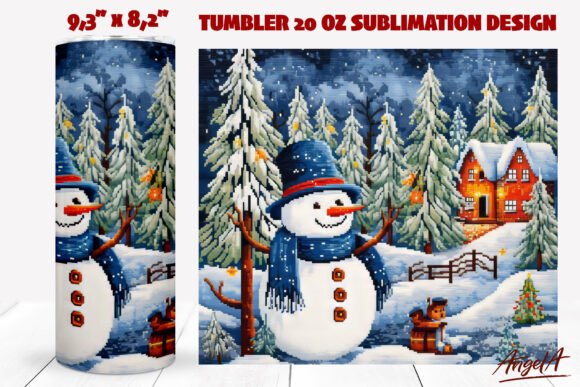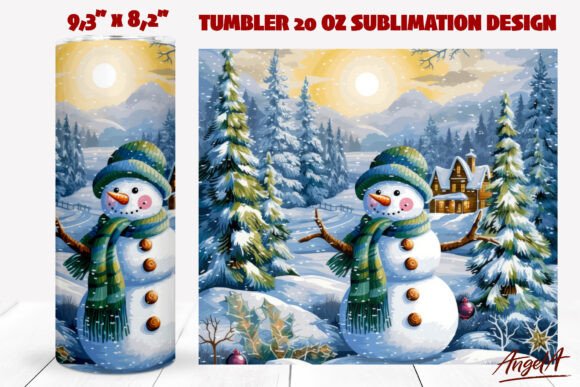
Faux Embroidery Snowman Tumbler Wrap
A Friendly, Festive Brand Accent—With Real Embroidery Considerations
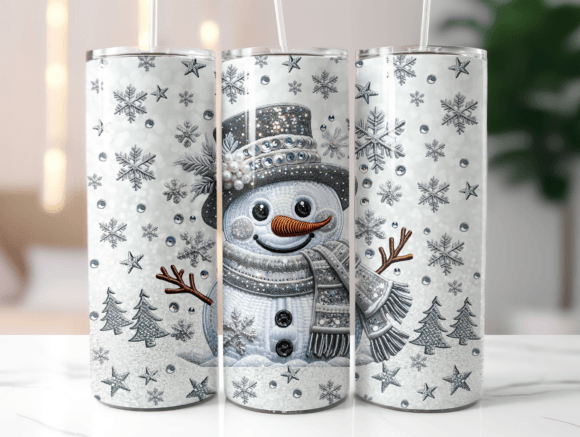
As an embroidery designer who’s digitized over 2,000 custom logos for cafés, boutiques, bakeries, and pet brands, my first impression of the Faux Embroidery Snowman Tumbler Wrap is warm, approachable, and seasonally resonant—without leaning into cliché. The “faux embroidery” styling suggests intentional texture and stitch-like dimension, even though this is a print-ready PNG at 300 dpi. That distinction matters: it’s not a machine embroidery design or embroidery file—it’s a graphic built for sublimation printing on tumblers, but its visual language translates powerfully to embroidered patches, aprons, caps, and tote bag designs when adapted thoughtfully.
Where It Shines in Small Business Merch
The Faux Embroidery Snowman Tumbler Wrap works beautifully as a chest logo accent on staff uniforms—especially for holiday pop-ups, local gift shops, or family-run bakeries wanting a handmade product feel. Its balanced composition (snowman centered with subtle scarf detail and soft round proportions) holds up well when scaled to 3"–4" for embroidered patch use on tote bags or apron pockets. I’ve seen similar designs elevate Etsy seller packaging—stitched onto cotton twill tags or heat-applied as a branded seal on kraft gift boxes.
For cap embroidery, the snowman’s clean silhouette and moderate detail level avoid thread nesting issues common with dense winter motifs. On dark denim or canvas tote bags, it reads clearly—particularly if paired with high-contrast thread colors like cream on navy or charcoal on oat. As a sleeve detail on work shirts for a florist or craft studio, it adds personality without overwhelming professionalism.
Use With Intention—Not Just Decoration
This isn’t just festive flair—it’s a functional brand identity tool. When stitched consistently across staff aprons, reusable totes, and limited-edition mugs, the Faux Embroidery Snowman Tumbler Wrap builds visual recognition fast. Customers remember warmth, consistency, and attention to detail—and that directly supports trust and repeat engagement. A local café using it on barista aprons and takeaway cup sleeves signals care in presentation, reinforcing perceived value beyond the product itself.
That said, treat it as a design asset, not a plug-and-play motif. Its faux-stitch texture implies craftsmanship, so mismatched execution—like low-density stitching on thin fabric or poor thread color contrast—can unintentionally undermine that impression. For handmade product branding, authenticity hinges on how faithfully the finished product reflects the design’s intended character.
Key Embroidery Designer Notes Before Production
- Test in black and white first: Confirm readability and balance without color distraction—especially important for small patch sizes (under 2.5") where fine details blur.
- Verify scalability: The PNG format means you’ll need to re-digitize it for true embroidery. Check whether key elements—scarf lines, button spacing, snowman outline—retain clarity at your target hoop size.
- Review thread color contrast carefully: Light-colored snowmen risk disappearing on off-white or ecru fabrics. Opt for matte cotton or tonal variegated threads to preserve the “faux embroidery” charm.
- Inspect spacing and density: High stitch density around curved edges (like the snowman’s brim or scarf ends) may pucker on stretchy or textured fabric—use cutaway stabilizer for caps or performance blends.
- Confirm commercial licensing: Since this is a digital embroidery file distributed as a printable graphic, verify usage rights before applying it to merchandise sold publicly—especially for Etsy sellers or wholesale apparel lines.
- Create a printable mockup for client approval: Show how the design translates from screen to stitched result on actual fabric swatches—not just flat PNG previews.
- Compare beside other design assets: Does the snowman’s weight, scale, and line thickness harmonize with your existing logo, typography, or tagline? Consistency strengthens brand identity across all touchpoints.
Where Caution Is Essential
Avoid using the Faux Embroidery Snowman Tumbler Wrap on highly curved surfaces like baseball cap fronts without significant digitizing adjustment—the original graphic assumes a flat tumbler wrap layout. Tiny lettering (if added later) or ultra-fine outlines won’t survive small patch sizes or frequent washing. On dark uniforms, skip light gray or pale yellow thread unless you’re layering underlay stitches for opacity.
Also note: because it’s delivered as a non-editable PNG, you cannot convert it directly to SVG or embroidery formats without recreation. If your shop relies on automated digitizing software, budget time for manual cleanup—especially around anti-aliased edges that confuse auto-trace tools. And always test on real fabric: what looks crisp on screen may bleed or distort on linen, terrycloth, or recycled polyester.
Final Thoughts for Embroidery Shops & Small Business Creators
The Faux Embroidery Snowman Tumbler Wrap isn’t just seasonal decoration—it’s a versatile, brand-aligned graphic with strong cross-application potential. Used intentionally, it supports cohesive small business merch systems: from staff-facing apparel (caps, aprons, tote bags) to customer-facing items (gift totes, product labels, event giveaways). Its visual tone—playful yet polished—fits perfectly with creative studios, pet brands launching holiday collections, or florists adding cozy charm to their spring-winter transition.
But success hinges on thoughtful adaptation—not assumption. Treat it as inspiration for embroidery, not a finished embroidery file. Respect its stylistic intent, validate its performance across your target materials, and align it with your broader design assets. When done right, the Faux Embroidery Snowman Tumbler Wrap becomes more than a motif—it becomes part of your brand’s quiet, consistent voice.