Hand-stitched Embroidery Art of Blue Bir
A Thoughtful First Impression for Real Embroidery Projects
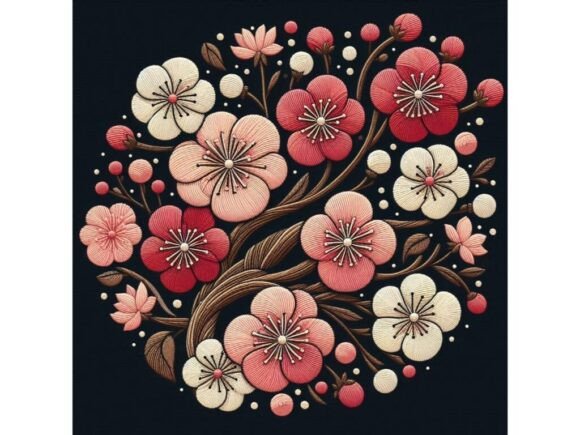
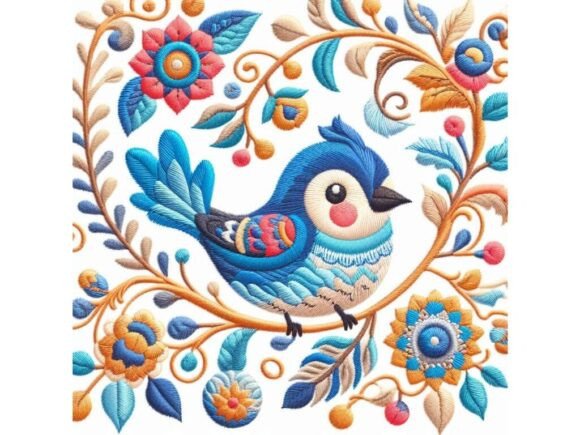
When I first opened the Hand-stitched Embroidery Art of Blue Bir on Creative Fabrica, I paused—not because it was flashy, but because it felt quietly intentional. The four JPEG files (4000×4000 at 300 dpi) showcase a stylized blue bird rendered with visible hand-embroidery texture: soft satin stitch feathers, delicate running stitch outlines, and subtle layered fill stitch in the wings. There’s no harsh vector sharpness here—just warm, organic line work and gentle color gradation against colorful backgrounds. It reads as *illustration*, not machine-ready embroidery file—but that distinction matters deeply if you’re planning real stitched products.
Where This Design Naturally Fits—and Where It Doesn’t
The Hand-stitched Embroidery Art of Blue Bir shines brightest when used as inspiration or as a printed design asset—not as a direct machine embroidery file. Its charm lies in its handmade mood: think nursery wall art printed on linen, baby blanket labels, kitchen towel prints, or embroidered patch backings where the bird motif is traced or interpreted by hand. For commercial embroidery, it’s not plug-and-play. You’ll need to digitize it—or adapt it carefully—especially since it includes fine details like feather tips and curved beak lines that may collapse or blur at small hoop sizes.
If you’re stitching on stretchy fabric (like cotton-blend sweatshirts) or textured surfaces (like terry cloth towels), those delicate outlines won’t translate cleanly without significant digitizing adjustments. And on dark fabric? The colorful background in the JPEGs means contrast isn’t built-in—you’ll need to isolate the bird and add underlay or adjust thread colors manually.
Real-World Use Across Handmade Product Categories
- Tote bags & aprons: Works beautifully as a sublimation or screen-printed motif—its illustrative quality holds up well on natural fibers and gives instant handmade credibility.
- Baby blankets & pillow covers: Ideal for printable mockups or heat-transfer vinyl cuts. As a machine embroidery design? Only after simplifying dense areas and reinforcing small features like eyes or feet.
- Caps & patches: Not recommended in current JPEG form—curved cap surfaces demand precise stitch placement and low stitch density. You’d need to reduce scale significantly and rework the entire fill structure.
- Kitchen towels & nursery decor: Excellent for digital printing or iron-on transfers. The soft blue palette reads calm and cohesive in home goods collections.
- Etsy listings & craft fairs: Adds strong visual storytelling to product photos. Pair it with real embroidered items (e.g., a matching hand-stitched bird patch beside the printed towel) to reinforce your brand’s handmade narrative.
How It Affects Your Finished Product’s Value
Using the Hand-stitched Embroidery Art of Blue Bir thoughtfully raises perceived value—not through complexity, but through mood alignment. Customers browsing handmade shops respond to authenticity. A tote bag featuring this bird feels curated, gentle, and intentional—especially next to minimalist typography or neutral linens. It supports brand consistency for makers who lean into botanical, nature-inspired, or slow-craft aesthetics.
That said, slapping the JPEG directly onto a mug or t-shirt without editing risks mismatched expectations. Buyers who see “hand-stitched” in the title may assume tactile embroidery—not flat print. So clarity in your listing descriptions matters. Call it what it is: a high-res illustration inspired by hand embroidery—versatile, evocative, and ready for adaptation.
Practical Embroidery Notes Before You Stitch
- Test on scrap fabric first—especially if using it as a guide for free-motion or hand embroidery. Note how thread tension affects feather definition.
- Check thread color contrast on both light and dark fabrics. The JPEG’s background colors don’t indicate optimal thread pairings.
- Review stitch density if digitizing: avoid overloading small areas like the eye or wingtips—dense fill stitch can pucker thin cotton or pop on frequent washing.
- Confirm hoop size compatibility. At full scale, this design likely exceeds standard 4×4 hoops. Plan for repositioning or scaling down.
- Use appropriate stabilizer—cutaway for knits, tear-away for stable wovens—to support detail retention.
- Inspect small details post-stitch. Running stitch outlines may need reinforcement; satin stitch edges often benefit from a second pass at lower density.
- Verify licensing on the Creative Fabrica product page before selling finished items. Since it’s listed under Illustrations and Graphics, confirm commercial use terms apply to physical products—not just digital resale.
Final Thoughts for Embroidery Designers and Creative Entrepreneurs
The Hand-stitched Embroidery Art of Blue Bir isn’t a shortcut—it’s a starting point. It rewards thoughtful integration: pairing printed versions with complementary hand-embroidered accents, using it as a focal point in layered nursery sets, or adapting select elements into simplified machine embroidery files for consistent branding. It’s especially valuable for Etsy sellers building cohesive collections around seasonal themes (spring birds, garden motifs) or boutique owners curating gift-ready bundles.
If you’re looking for a ready-to-hoop machine embroidery design, keep searching. But if you value mood, texture, and illustration-led design assets that elevate your handmade product photography and strengthen your creative voice—this is a quiet standout. Just remember: its strength lies in how you choose to interpret it, not how literally you apply it.